




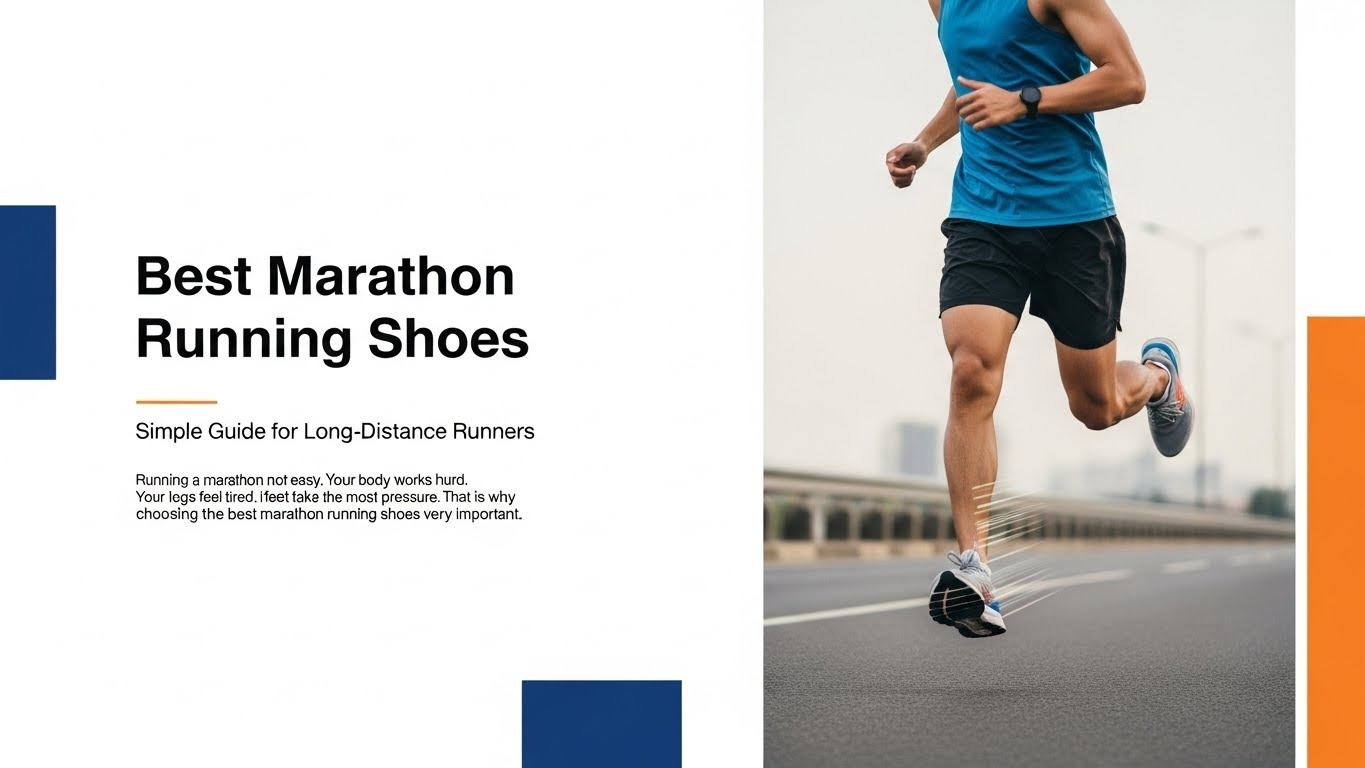
Running a marathon is not easy.
Your body works hard.
Your legs feel tired.
Your feet take the most pressure.
That is why choosing the best marathon running shoes is very important.
Why Choosing the Best Marathon Running Shoes Matters

A marathon is 42.2 kilometers (26.2 miles).
That is very long.
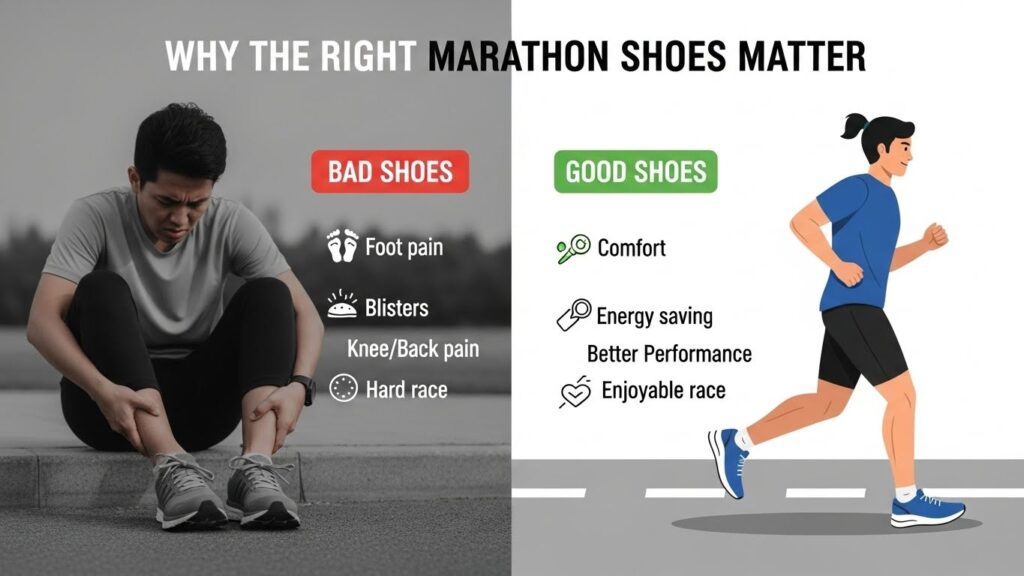
If your shoes are bad:
- Your feet can hurt
- You can get blisters
- You may feel knee or back pain
- Your race can become very hard
If your shoes are good:
- You feel more comfortable
- You save energy
- You run better and longer
- You enjoy the race
The best marathon running shoes protect your feet.
They also help your body stay strong until the finish line.
What Makes the Best Marathon Running Shoes?
Not all running shoes are good for marathons.
Marathon shoes must support you for many hours.
Here are the most important things to look for.
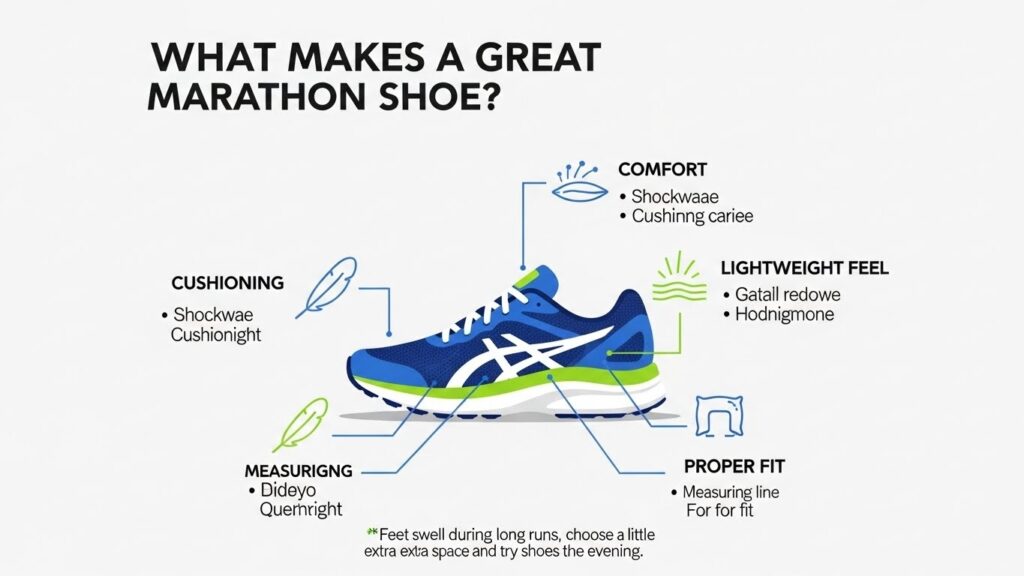
1. Comfort Is Number One
Comfort is very important in a marathon.
If shoes hurt after 5 km, they are not marathon shoes.
Good marathon shoes have:
- Soft padding
- Smooth inner lining
- No hard pressure points
Your toes should move freely.
Your heel should feel locked and safe.
2. Cushioning for Long Distance
Cushioning helps absorb shock.
Each step hits the ground hard.
Good cushioning:
- Protects joints
- Reduces foot pain
- Helps you run longer
Too little cushion = pain.
Too much cushion = unstable feel.
The best marathon running shoes balance cushioning and control.
3. Lightweight Feel Helps You Go Faster
Heavy shoes waste energy.
Light shoes help you move faster.
Marathon shoes should feel:
- Light
- Easy to lift
- Smooth while running
Many runners like lightweight shoes for race day.
Training shoes can be heavier.
4. Proper Fit Is Very Important
Wrong fit can ruin your race.
Your marathon shoes should:
- Have thumb space in the toe box
- Not squeeze your foot
- Not slip at the heel
Feet swell during long runs.
Always choose a little extra space.
Try shoes in the evening.
Feet are bigger at that time.
Types of Best Marathon Running Shoes
Not all runners are the same.
So, there are different shoe types.
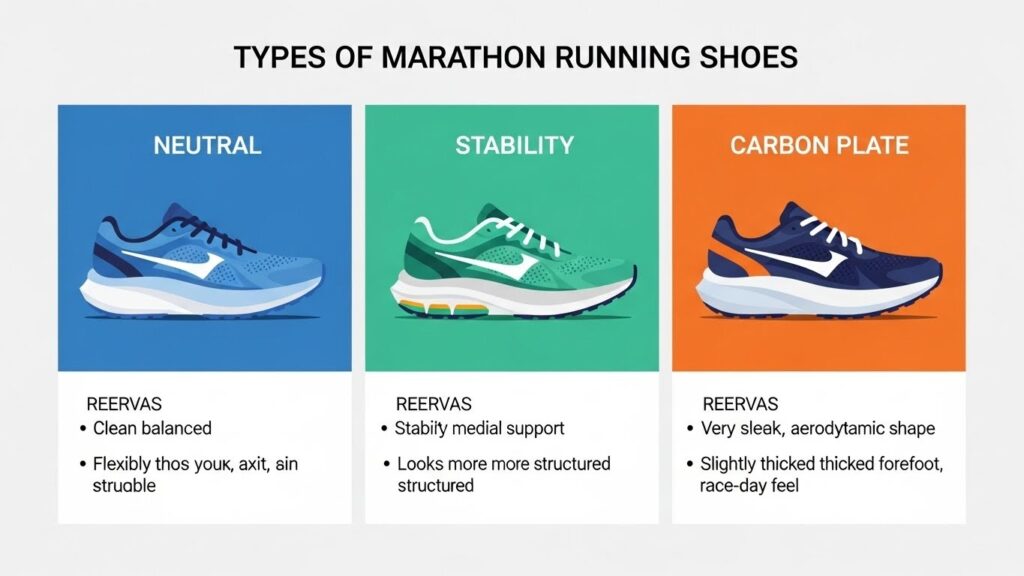
Neutral Marathon Running Shoes
These shoes are for runners with normal foot movement.
They:
- Feel flexible
- Work for most runners
- Are very popular
If you do not know your foot type, start here.
Stability Marathon Running Shoes
These shoes help control foot movement.
They are good for runners who:
- Overpronate (foot rolls inward)
- Need extra support
- Want more balance
Stability shoes reduce injury risk.
Carbon Plate Marathon Shoes
These are fast shoes.
Many elite runners use them.
They have:
- A carbon plate inside
- Strong energy return
- Very light weight
They help speed but cost more.
Not best for beginners.
Who Needs the Best Marathon Running Shoes?
These shoes are for:
- First-time marathon runners
- Experienced runners
- Slow runners
- Fast runners
Every runner needs the right shoe.
There is no “one shoe for all.”
Your body, pace, and comfort matter most.
Common Mistakes When Buying Marathon Shoes
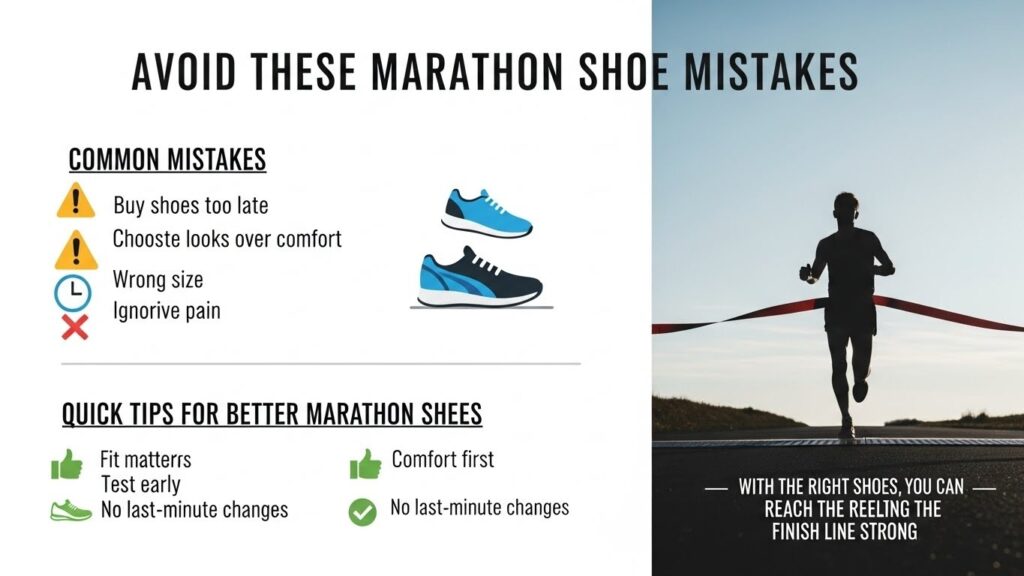
Avoid these mistakes:
- Buying shoes one week before race
- Choosing style over comfort
- Wearing brand-new shoes on race day
- Buying the wrong size
Always test shoes before the marathon.
Run at least 30–50 km in them.
Quick Tip for Beginners
If you are new:
- Choose comfort, not speed
- Avoid carbon shoes
- Pick trusted brands
- Visit a running store if possible
The best marathon running shoes for beginners feel safe and soft.
Best Marathon Running Shoes for Different Runners
Every runner is different.
Your body. Your speed. Your feet.
So, the best marathon running shoes depend on you.
Let’s look at shoes for different runner types.
Best Marathon Running Shoes for Beginners
If you are new to marathons, comfort is key.
Beginner runners should choose shoes that:
- Feel soft
- Give good support
- Are easy to run in
Avoid very fast or aggressive shoes.
Carbon plate shoes are not needed yet.
Good beginner marathon shoes:
- Protect your feet
- Reduce injury risk
- Help you finish strong
Best Marathon Running Shoes for Experienced Runners
Experienced runners know their body well.
They know what works.
They often want:
- Better energy return
- Lighter weight
- Faster feel
Many experienced runners use:
- Lightweight shoes
- Carbon-plated shoes
But comfort still matters.
Never choose speed over safety.
Best Marathon Running Shoes for Wide Feet
Wide feet need extra space.
Narrow shoes cause pain and blisters.
If you have wide feet:
- Look for wide or extra-wide sizes
- Check the toe box
- Avoid tight designs
Your toes should spread naturally.
Many brands offer wide options now.
Best Marathon Running Shoes for Flat Feet
Flat feet need more support.
Good shoes for flat feet:
- Offer stability
- Control inward foot roll
- Have firm midsoles
Stability shoes are best here.
They reduce stress on ankles and knees.
Best Marathon Running Shoes for Heavy Runners
Heavy runners put more pressure on shoes.
They need:
- Strong cushioning
- Durable midsoles
- Stable outsoles
Soft but firm cushioning works best.
Avoid very thin shoes.
Training Shoes vs Race Day Shoes
This is very important.
Training Shoes
You wear these most days.
They:
- Are more durable
- Have more cushioning
- Protect your body
Training shoes help build strength.
Race Day Shoes
You wear these on marathon day.
They:
- Are lighter
- Feel faster
- Have better energy return
Some runners use carbon shoes for race day.
Never wear new shoes on race day.
How to Test Marathon Running Shoes
Testing shoes is very important.
Before race day:
- Run at least 30–50 km
- Try long runs
- Test on similar road surfaces
Check for:
- Hot spots
- Heel slipping
- Toe pressure
If pain appears early, stop using them.
How Long Do Marathon Running Shoes Last?
Most marathon shoes last:
- 300 to 500 miles
- 480 to 800 kilometers
Carbon shoes may last less.
If you see:
- Flat cushioning
- Worn outsole
- New pain
It is time to change shoes.
Breathability Matters in Marathon Shoes
Feet sweat a lot in marathons.
Good shoes should:
- Let air flow
- Keep feet cool
- Reduce blisters
Mesh uppers work best.
Hot feet = more problems.
Popular Brands for the Best Marathon Running Shoes
Some brands are trusted worldwide.
Popular marathon shoe brands:
- Nike
- Adidas
- ASICS
- Brooks
- New Balance
- Saucony
Do not choose brand only.
Choose comfort first.
Simple Buying Tips
Before buying:
- Try shoes late in the day
- Wear running socks
- Walk and jog in store
Online buyers:
- Check return policy
- Read real reviews
The best marathon running shoes feel good from the first step.
How to Break In the Best Marathon Running Shoes
Never run a marathon in brand-new shoes.
This is very important.
New shoes feel stiff at first.
Your feet need time to adjust.
Easy Steps to Break In Marathon Shoes
Follow these steps:
- Wear them at home for short time
- Walk in them for 1–2 days
- Run short distances first
- Slowly increase distance
After 30–50 km, shoes feel better.
Now they are closer to race-ready.
Common Mistakes Runners Make with Marathon Shoes

Many runners make these mistakes.
You should avoid them.
Mistake 1: Buying Shoes Too Late
Do not buy shoes one week before race.
This causes pain and blisters.
Buy shoes at least:
- 6 to 8 weeks before marathon
Mistake 2: Choosing Looks Over Comfort
Nice colors do not help your feet.
Comfort always comes first.
Mistake 3: Wrong Shoe Size
Feet swell during long runs.
Small shoes cause toe pain and black nails.
Always leave:
- Thumb-width space in front
Mistake 4: Ignoring Pain Signs
Pain is a warning.
If shoes cause pain:
- Stop using them
- Try another pair
The best marathon running shoes should feel good, not painful.
Are Expensive Shoes Always Better?
Not always.
Some expensive shoes:
- Have carbon plates
- Are made for speed
But they are not for everyone.
Budget shoes can also be great if:
- They fit well
- They feel comfortable
- They support your foot
Do not chase price.
Chase comfort and fit.
Can You Run a Marathon in Training Shoes?
Yes, you can.
Many runners finish marathons in:
- Daily training shoes
This is okay if:
- Shoes are not worn out
- Cushioning still feels good
Race shoes are optional.
Comfort is not optional.
Best Marathon Running Shoes for Injury Prevention
Good shoes help reduce injuries.
They should:
- Absorb shock
- Support foot movement
- Keep balance
Shoes alone do not prevent injury.
But bad shoes increase risk.
Also remember:
- Proper training
- Rest days
- Stretching
Marathon Shoe Care Tips
Take care of your shoes.
Do this:
- Air dry after runs
- Remove insoles
- Avoid washing machines
Do not do this:
- Dry in sun
- Use heaters
Good care = longer shoe life.
Frequently Asked Questions (FAQs)
How tight should marathon running shoes be?
They should feel snug, not tight.
No pressure points.
Should marathon shoes be bigger than normal shoes?
Yes.
Half size bigger works for many runners.
Can I use trail running shoes for a road marathon?
No.
Trail shoes are heavy and stiff.
Road shoes are better.
Are carbon shoes good for beginners?
No.
They are better for experienced runners.
Final Thoughts on the Best Marathon Running Shoes
Running a marathon is a big goal.
Your shoes play a big role.
The best marathon running shoes:
- Feel comfortable
- Fit your feet
- Support your running style
There is no perfect shoe for everyone.
There is only the perfect shoe for you.
Take time to choose.
Test before race day.
Listen to your feet.
When your shoes feel right,
your run feels better
Quick Summary
- Comfort comes first
- Fit matters most
- Test shoes early
- Avoid last-minute changes
With the right shoes,
you can reach the finish line strong.


