


When people get hurt, they need therapy to heal. Doctors and physical therapists often use special tools to help patients recover. One simple but powerful tool is the resistance band.
A resistance band is a stretchy piece of rubber. It looks small, but it can help the body get stronger, reduce pain, and improve movement. Many people use them at home or in a clinic.
In this guide, we will explain what resistance bands are, why they are useful, their benefits, best exercises, and how to choose the right one. We will also share pros and cons, and answer common questions.
What Are Resistance Bands?
Resistance bands are elastic bands made from rubber or fabric. They are used to stretch muscles, build strength, and support recovery.
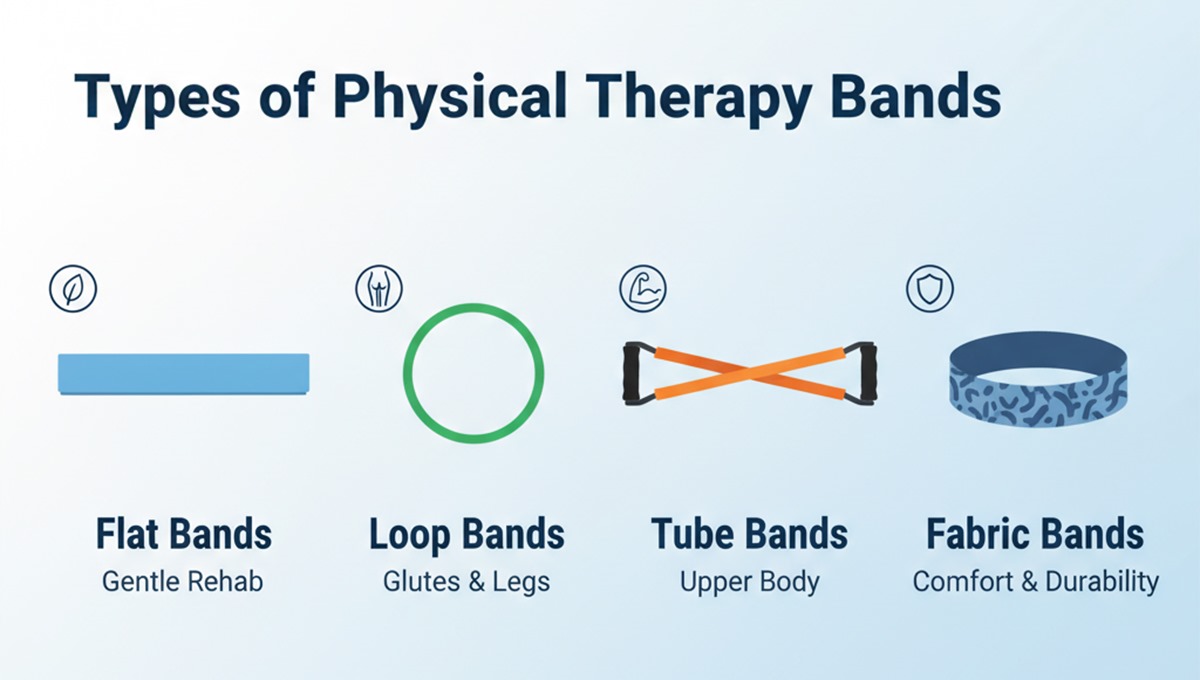
They come in many types:
- Flat therapy bands – wide and flat, good for gentle exercises.
- Loop bands – small circles, often used for legs.
- Tube bands with handles – look like ropes with handles.
- Fabric bands – soft, strong, and good for comfort.
These bands come in different colors. Each color usually means a different resistance level. For example:
- Yellow = very light resistance
- Red = light resistance
- Green = medium resistance
- Blue = heavy resistance
- Black = very heavy resistance
This makes them good for beginners, seniors, and athletes.
Why Resistance Bands Are Used in Physical Therapy
Physical therapists use resistance bands because they are:
- Safe – They don’t put too much stress on the joints.
- Easy – Anyone can use them at home or in a clinic.
- Flexible – They can be used for many body parts.
- Affordable – Much cheaper than gym machines.
- Portable – Small and light, easy to carry anywhere.
When a person has knee pain, shoulder pain, or surgery recovery, bands are perfect to start gentle exercises. They help muscles work without heavy weights.
Physical Therapy Resistance Bands
1. Loop Bands
- Small circle shape
- Used for legs and glutes
- Common in rehab and fitness training
2. Therapy Flat Bands
- Flat, wide strip of rubber
- Used in hospitals and clinics
- Great for arm and shoulder rehab
3. Tube Bands with Handles
- Long tube with handles on both ends
- Easy for upper body exercises
- Feels more like gym machines
4. Fabric Resistance Bands
- Strong, soft, and wider
- Don’t roll or snap easily
- Perfect for comfort and durability
5. Light vs. Heavy Resistance Bands
- Light bands are good for rehab, stretching, and seniors
- Heavy bands are good for athletes, building strength, and advanced rehab
Benefits of Using Resistance Bands in Rehabilitation
credit By : Fitness My Life
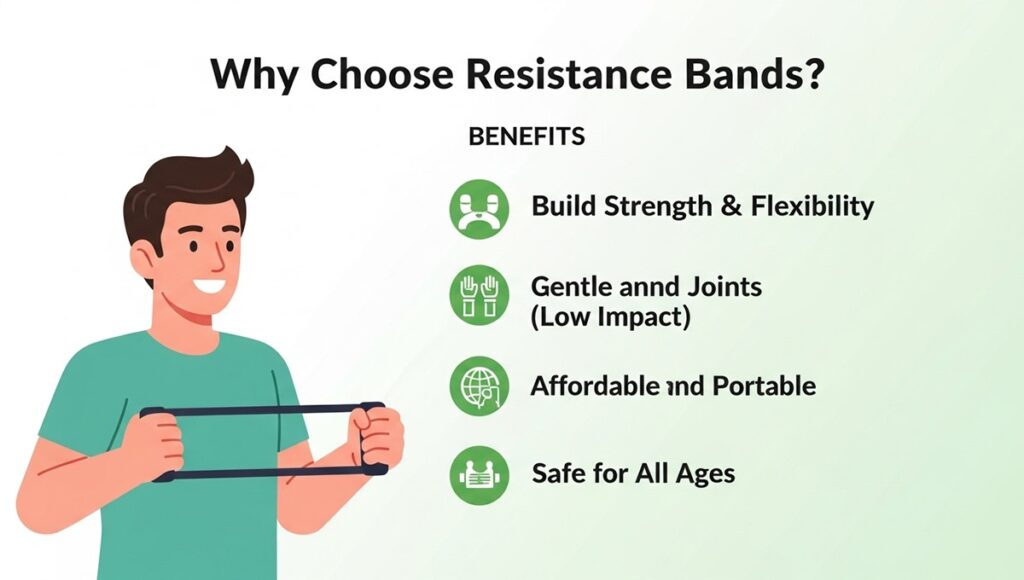
Using resistance bands in therapy has many advantages:
1. Improving Strength and Flexibility
Bands make muscles work harder. This helps them become strong and flexible. They also improve range of motion.
2. Low-Impact Recovery for Injuries
Unlike heavy weights, bands give gentle resistance. This is perfect for people with joint pain, arthritis, or injury.
3. Affordable and Portable Equipment
Resistance bands are cheap and easy to carry. You can use them at home, office, or gym.
4. Suitable for All Fitness Levels
From beginners to athletes, anyone can use resistance bands. You just pick the right color and strength.
How Physical Therapists Use Resistance Bands
Therapists use bands to help patients recover faster.
Common Injuries Treated with Resistance Bands
- Knee injuries (ACL, meniscus tear)
- Shoulder injuries (rotator cuff problems)
- Back pain
- Post-surgery recovery
- Stroke rehabilitation
Recommended Exercises by Physical Therapists
- Shoulder rotations
- Bicep curls
- Leg raises
- Glute bridges
- Seated band pulls
Progression and Resistance Levels
Therapists start with light bands. When patients get stronger, they move to medium or heavy bands. This way, recovery is safe and slow.
Pros and Cons of Physical Therapy Resistance Bands
Like every tool, resistance bands have good and bad sides.
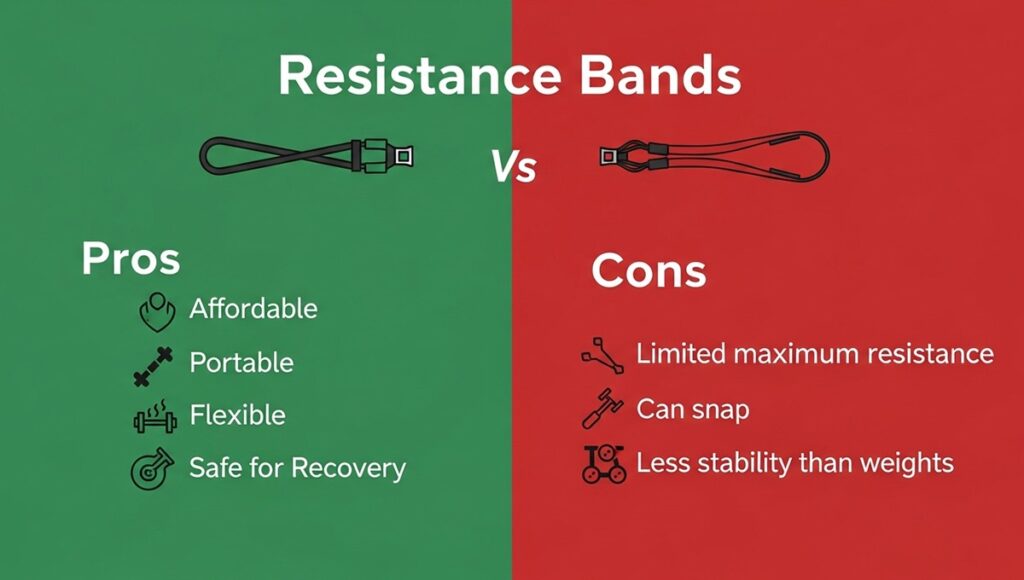
Pros
✔ Cheap and affordable
✔ Small and easy to carry
✔ Safe for beginners and seniors
✔ Many exercises possible
✔ Can be used at home or clinic
Cons
✘ Can snap if old or poor quality
✘ Not as heavy as gym weights
✘ Need proper guidance to use safely
✘ May roll or slip during exercise
Best Resistance Band Exercises for Recovery
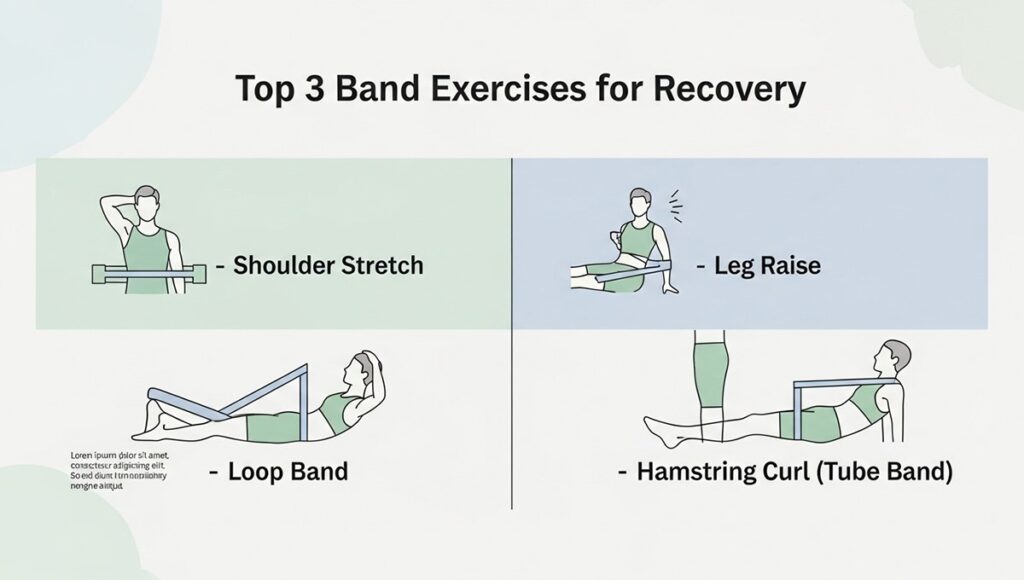
Exercises with bands are simple, safe, and effective. They can be done by people of all ages. Below are the most common physical therapy exercises.
Upper Body Exercises
Shoulder Rotations
- Attach the band to a door or pole.
- Hold the band with one hand, keep elbow close to the body.
- Pull band slowly in or out, rotating shoulder.
This is great for rotator cuff injuries and shoulder pain.
Bicep Curls
- Step on the band.
- Hold the ends with your hands.
- Bend elbows and pull band upward.
Builds arm strength after injuries or surgery.
Lower Body Exercises
Leg Raises
- Tie the band around ankles.
- Stand straight and lift one leg to the side.
- Keep the other leg firm on the ground.
Helps with hip strength and balance.
Glute Bridges
- Place a loop band above knees.
- Lie on your back, bend knees, and lift hips up.
- Push knees outwards while lifting.
Good for glutes, hamstrings, and lower back.
Core Exercises
Seated Band Rotations
- Sit on a chair.
- Hold band with both hands, fixed to the side.
- Rotate your upper body left and right.
Improves core stability and helps people with back pain.
Standing Band Twists
- Stand tall, hold band at chest level.
- Pull across your body in a twisting motion.
Builds oblique muscles and helps with spine recovery.
Choosing the Right Resistance Band for Therapy
Not every band is the same. Picking the right one is very important.
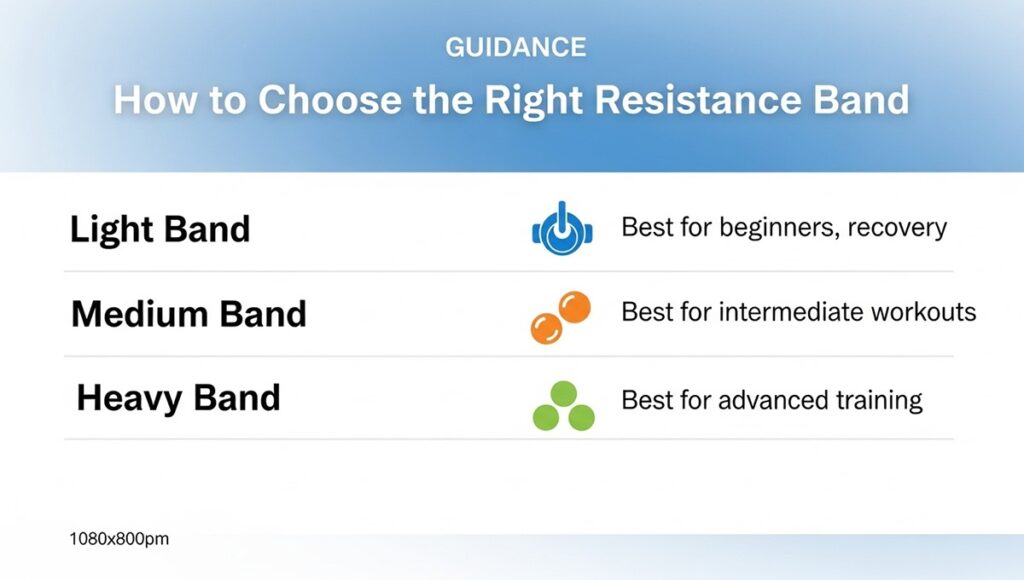
How to Select Resistance Levels
- Beginners and seniors → Yellow or red (light resistance)
- Intermediate users → Green (medium resistance)
- Advanced users and athletes → Blue or black (heavy resistance)
Always start with lighter bands. Then move up when it feels easy.
Material and Durability Considerations
- Rubber bands – cheap but may snap quickly.
- Fabric bands – soft, long-lasting, and comfortable.
- Therapy-grade bands – used in clinics, very safe.
Safety Tips for Beginners
- Check bands for cracks before use.
- Do exercises slowly and with control.
- Do not overstretch the band.
- Ask a therapist for guidance if unsure.
Comparing Resistance Bands to Traditional Weights
Many people ask: “Are bands better than weights?” Let’s compare.
Advantages of Bands over Weights
✔ Safer for injury recovery
✔ Easy to carry, perfect for travel
✔ Cheaper than dumbbells or machines
✔ Can target small muscles better
✔ Great for rehab and seniors
Limitations of Resistance Bands
✘ Not as heavy as gym weights
✘ Hard to measure progress (no exact weight numbers)
✘ Bands can break over time
✘ Advanced athletes may need more resistance
So, bands are best for therapy, beginners, and mobility. While weights are better for muscle building and sports training.
Care and Maintenance of Resistance Bands
To keep your band safe and long-lasting, follow these steps:
Proper Cleaning Methods
- Wipe bands with a damp cloth after use.
- Do not use strong chemicals or soap.
- Let them air dry, not in direct sunlight.
Storage and Longevity Tips
- Store in a cool, dry place.
- Do not stretch and keep rolled up.
- Replace if you see cracks or thinning.
Good care means your band can last for many months or even years.
Advanced Tips for Using Physical Therapy Resistance Bands
Once you learn the basics, you can add some advanced tips to make your therapy even more effective.
1. Combine Bands with Other Exercises
You can use bands with walking, yoga, or light weights. This makes your workout more complete and improves strength faster.
2. Use Bands for Warm-Up and Cool-Down
Bands are not only for rehab. They are also great for stretching before and after workouts. This helps reduce stiffness and prevent injuries.
3. Track Your Progress
- Write down the band color you use.
- Note how many reps and sets you complete.
- Move to a stronger band when it feels too easy.
Tracking progress keeps you motivated and shows how much you are improving.
4. Try Functional Movements
Bands are excellent for real-life movements like pulling, pushing, and twisting. These help you recover for daily activities such as carrying groceries or climbing stairs.
Real-Life Success Stories with Resistance Bands
Sometimes real stories inspire us more than facts. Here are some examples:
Case 1: Shoulder Injury Recovery
Maria, age 40, had a rotator cuff injury. She used a therapy flat band for shoulder rotations. After 8 weeks, her pain reduced, and she could lift her arm again.
Case 2: Knee Surgery Rehab
John, age 55, had knee surgery. His therapist gave him loop bands for leg raises. Slowly, he built strength and balance, and he returned to walking without pain.
Case 3: Senior Mobility
A 70-year-old man used light bands to do seated band pulls and leg lifts. His posture improved, and he felt more confident in daily movement.
These examples show how bands can change lives, from young adults to seniors.
Why Physical Therapy Resistance Bands Are Better for Home Use
Many people cannot go to the gym or clinic every day. Bands are perfect for home recovery because:
- They are cheap – no big investment needed.
- They are quiet – no noisy machines.
- They take little space – fit in a drawer or bag.
- They allow anytime exercise – morning, evening, or during breaks.
Even 10–15 minutes a day with bands can make a big difference.
Pros and Cons Recap
To make it simple, here is a quick recap in a table:
| Pros | Cons |
|---|---|
| Cheap and portable | Can snap if old |
| Easy to use at home | Limited resistance for athletes |
| Safe for rehab and seniors | Hard to measure exact weight |
| Many exercises possible | Need correct guidance |
| Good for flexibility and strength | Bands may roll or slip |
As you can see, the pros are much stronger than the cons.
When to Avoid Resistance Bands
Even though bands are safe, they are not for every situation. Avoid or be careful if:
- You have fresh fractures or open wounds.
- You feel sharp pain during exercise.
- The band is damaged or too tight.
- You are not cleared by your doctor after surgery.
Always ask your therapist or doctor before starting.
External Resource for More Learning
If you want more trusted information about safe exercise and therapy. So you can check : American Physical Therapy Association (APTA)
They share guides on rehab exercises, mobility, and safe recovery.
FAQs About Physical Therapy Resistance Bands
1. Are resistance bands safe for seniors?
Yes. They are gentle and safe. Seniors can use light bands to improve strength and balance.
2. How often should I use resistance bands in therapy?
Most therapists suggest 3–4 times a week. But it depends on your injury and recovery speed.
3. Can resistance bands replace gym equipment?
For rehab and light training, yes. But for heavy muscle growth, gym weights are still needed.
4. What resistance level is best for beginners?
Start with yellow or red bands. They give very light resistance and are easy to control.
5. How do I know if I’m using the band correctly?
If you feel smooth movement and no sharp pain, you are doing it right. Ask a therapist to check your form.
6. Do resistance bands help with chronic pain recovery?
Yes. They are often used for arthritis, back pain, and joint stiffness. But always start under a doctor’s advice.
Conclusion: The Role of Resistance Bands in Physical Therapy
Physical therapy resistance bands are small but powerful tools. They are cheap, safe, and effective for people of all ages. Resistance bands help you heal, get stronger, and move with confidence
We learned about:
- Types of bands (loop, flat, tube, fabric)
- Benefits (strength, flexibility, low impact)
- Best exercises for arms, legs, and core
- How to choose the right band
- Pros and cons of using bands
- Care tips, FAQs, and success stories
The best thing is: resistance bands make therapy possible at home. With just 10 minutes a day, you can start feeling better and move with less pain.
So, if you are starting your rehab journey, grab a band, follow simple exercises, and let your body heal step by step.
