





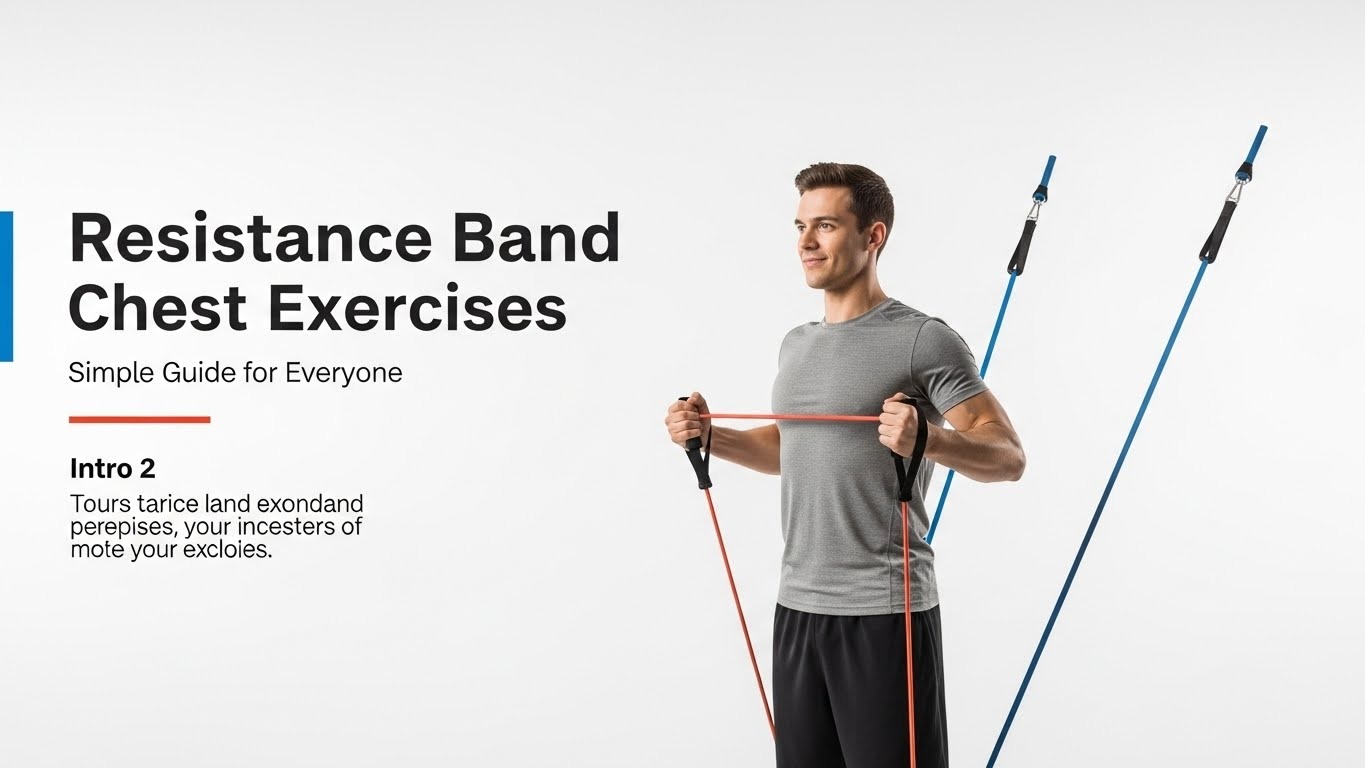
Do you want a strong chest?
Do you want to train at home without heavy weights?
Then resistance band chest exercises are perfect for you.
Resistance bands are rubber bands for exercise.
They stretch and give resistance.
They are safe, light, and easy to use.
You can train anywhere: home, park, or travel.
Why Choose Resistance Band Chest Exercises

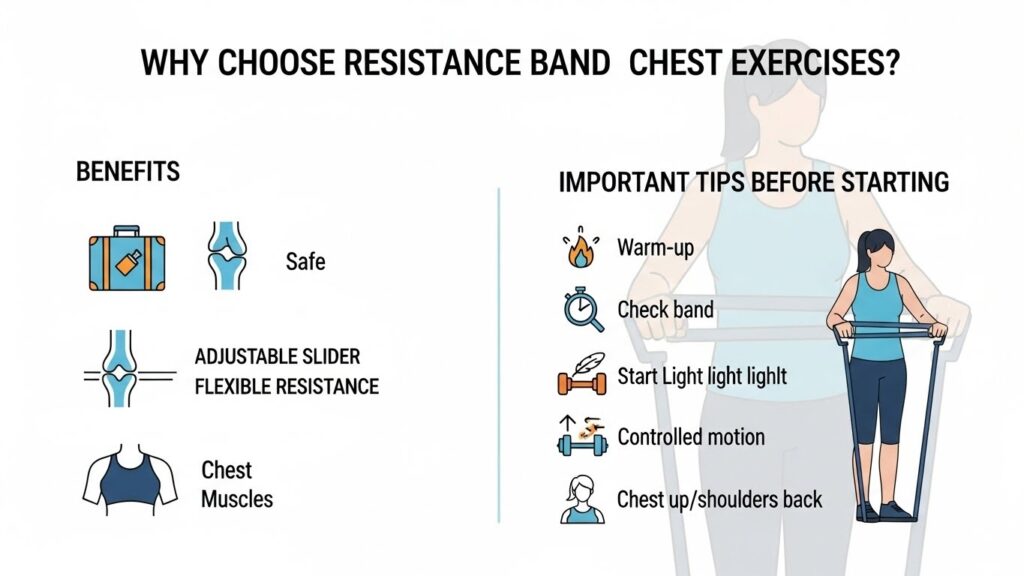
Resistance bands are better than some machines for a few reasons:
- Portable – You can take them anywhere.
- Safe for joints – They are gentle on shoulders and elbows.
- Flexible resistance – You can use light or heavy bands.
- Target chest muscles – Upper, middle, and lower chest.
You can do full chest workouts without heavy dumbbells.
These exercises help to strengthen, tone, and shape your chest.
Important Tips Before Starting
Before you start chest exercises, remember these tips:
- Warm Up First – Move arms, shoulders, and chest for 5–10 minutes.
- Check the Band – Make sure it is not damaged.
- Start Light – Use a lighter band first.
- Control the Motion – Move slowly, do not snap the band.
- Keep Good Posture – Stand tall, chest up, shoulders back.
Following these tips prevents injury and makes exercises more effective.
Resistance Band Chest Exercises Step by Step
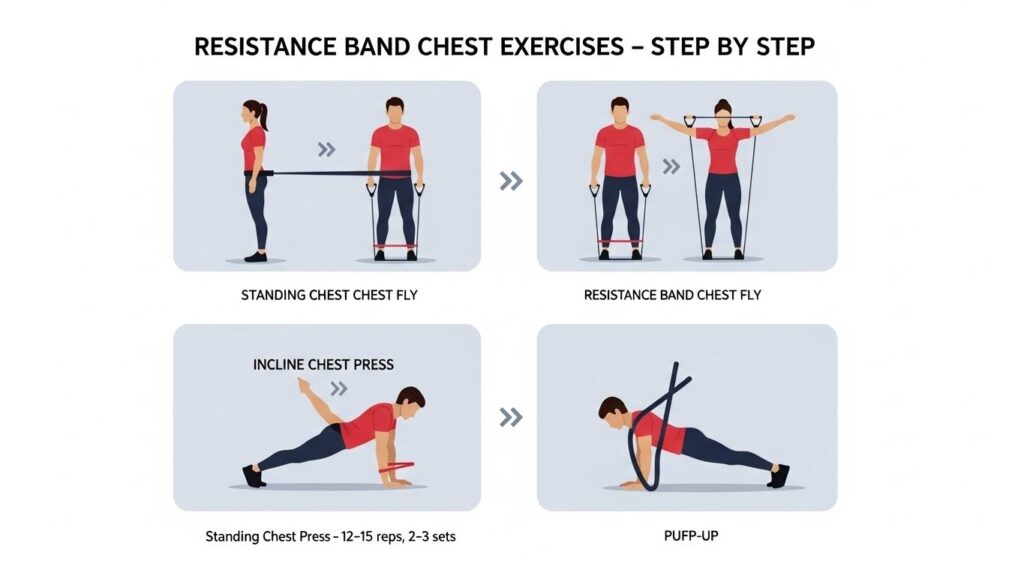
Here are the best exercises for your chest.
1. Standing Chest Press
This is like a push with your arms.
It works the middle chest.
How to do it:
- Anchor the band behind you (door, pole, or wall hook).
- Hold handles in both hands.
- Stand with one foot in front.
- Push your hands forward until arms are straight.
- Slowly return to start.
- Repeat 12–15 times for 2–3 sets.
Tips:
- Keep elbows slightly bent.
- Do not lean forward.
- Feel the chest working.
2. Resistance Band Chest Fly
Chest fly stretches and contracts the chest.
It works inner chest and pectoral muscles.
How to do it:
- Anchor band behind you.
- Hold a handle in each hand.
- Keep arms slightly bent.
- Open arms wide, then bring them together in front of your chest.
- Return slowly.
- Do 12–15 reps, 2–3 sets.
Tips:
- Keep core tight.
- Avoid locking elbows.
- Move slowly for best effect.
3. Incline Chest Press with Bands
Incline press targets the upper chest.
How to do it:
- Anchor band low (bottom of door).
- Hold handles, step forward.
- Push hands upward at an angle.
- Return slowly.
- Do 12–15 reps, 2–3 sets.
Tips:
- Keep shoulders down.
- Chest should feel the push.
4. Decline Chest Press with Bands
Decline press works the lower chest.
How to do it:
- Anchor band high (top of door).
- Hold handles, step back.
- Push hands downward at an angle.
- Slowly return.
- Repeat 12–15 reps, 2–3 sets.
Tips:
- Keep elbows slightly bent.
- Control the motion.
5. Single Arm Chest Press
Single arm press focuses on one side.
It improves balance and core stability.
How to do it:
- Anchor band behind you.
- Hold one handle.
- Push forward with one arm.
- Slowly return.
- Switch arms.
- 10–12 reps each side, 2–3 sets.
Tips:
- Engage your core.
- Do not twist your body.
6. Push-Up with Resistance Band
Push-up with a band increases resistance.
It works chest, shoulders, and triceps.
How to do it:
- Loop band across your back and hold ends in hands.
- Get into push-up position.
- Lower chest to floor.
- Push back up slowly.
- Repeat 10–15 times, 2–3 sets.
Tips:
- Keep body straight.
- Core tight.
- Band adds extra resistance.
Sample Resistance Band Chest Workout
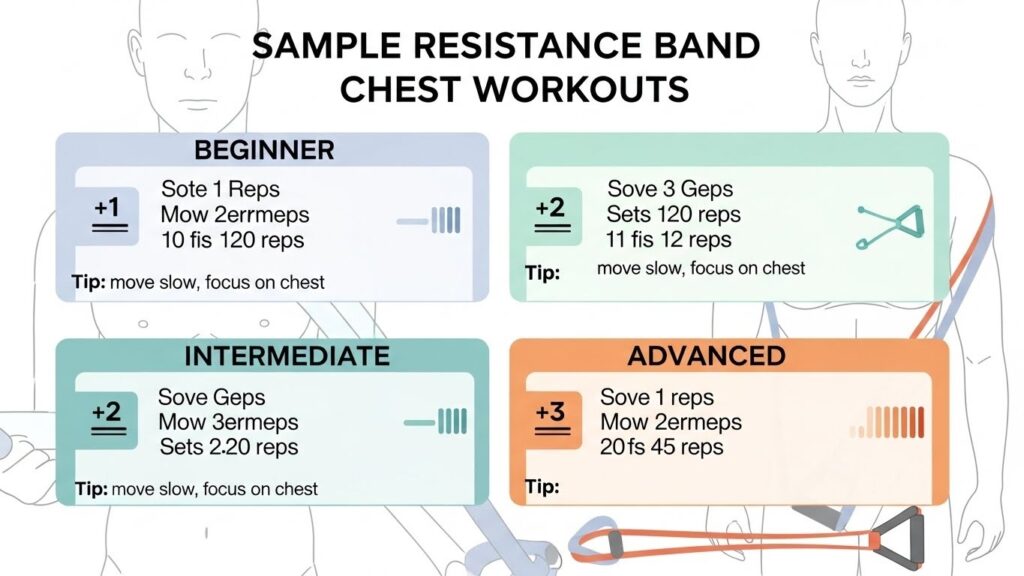
Now, you know exercises.
Next, let’s make a complete workout.
You can do this at home.
No heavy weights needed.
Beginner Workout (15–20 minutes)
- Standing Chest Press – 2 sets, 12 reps
- Resistance Band Chest Fly – 2 sets, 12 reps
- Single Arm Chest Press – 2 sets, 10 reps each side
- Push-Up with Band – 2 sets, 10 reps
Tips:
- Rest 30–60 seconds between exercises
- Focus on slow movement
- Keep chest tight, core engaged
Intermediate Workout (20–30 minutes)
- Incline Chest Press – 3 sets, 12 reps
- Decline Chest Press – 3 sets, 12 reps
- Chest Fly – 3 sets, 12 reps
- Push-Up with Band – 3 sets, 12 reps
- Single Arm Chest Press – 2 sets, 10 reps each side
Tips:
- Slightly heavier band if comfortable
- Keep full range of motion
- Focus on chest contraction
Advanced Workout (30–40 minutes)
- Incline Chest Press – 4 sets, 12 reps
- Decline Chest Press – 4 sets, 12 reps
- Chest Fly – 3 sets, 15 reps
- Push-Up with Band – 3 sets, 15 reps
- Single Arm Chest Press – 3 sets, 12 reps each side
- Superset: Chest Press + Chest Fly – 2 sets, 12 reps each
Tips:
- Use heavier resistance bands
- Move slow and controlled
- Rest 30–45 seconds between supersets
- Focus on muscle feel, not speed
Common Mistakes to Avoid
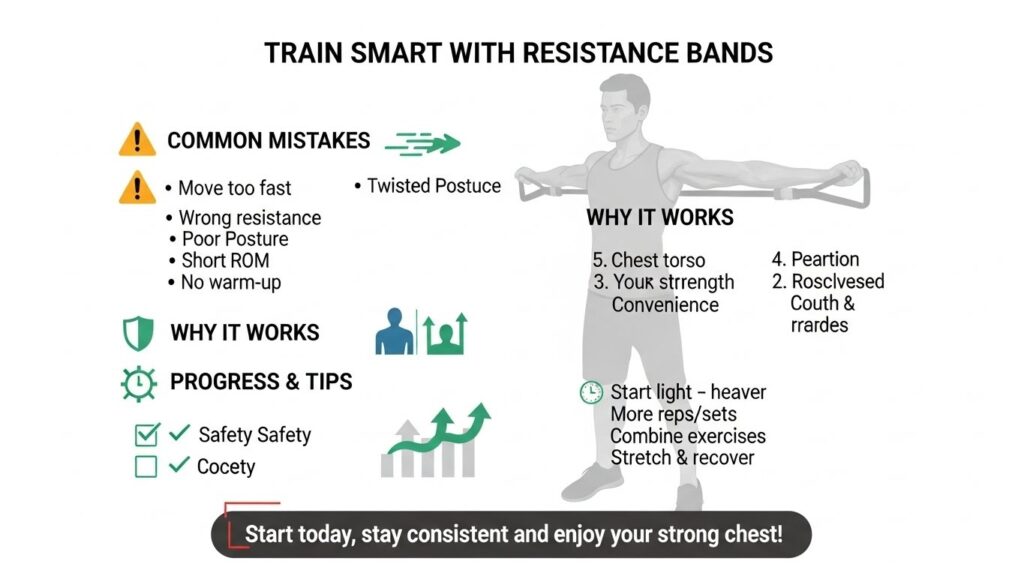
Many people make mistakes with resistance band chest exercises.
Avoid these:
Mistake 1: Moving Too Fast
- Fast movement reduces effectiveness
- Increases injury risk
- Move slowly and feel the chest muscles
Mistake 2: Using Wrong Band Resistance
- Too heavy band → poor form, pain
- Too light band → not challenging
- Choose a band that is challenging but safe
Mistake 3: Poor Posture
- Slouching reduces chest activation
- Keep chest up, shoulders back
- Engage core for balance
Mistake 4: Short Range of Motion
- Don’t stop halfway
- Extend arms fully, then return slowly
- Full motion gives better chest growth
Mistake 5: Ignoring Warm-Up and Stretch
- Cold muscles → higher injury risk
- 5–10 minutes of warm-up is important
- Stretch after workout to relax chest
Stretching and Cool Down
After chest exercises, stretch your muscles.
Stretching improves flexibility and recovery.
Simple Chest Stretches
- Doorway Chest Stretch
- Stand in doorway
- Place hands on doorframe
- Lean forward gently
- Hold 20–30 seconds
- Arm Across Chest Stretch
- Pull one arm across chest
- Use other hand to support
- Hold 20–30 seconds each side
- Child’s Pose Stretch
- Kneel on floor
- Stretch arms forward
- Lower chest gently
- Hold 20–30 seconds
Why Resistance Band Chest Exercises Are Effective
- Safe for shoulders – gentle resistance
- Work chest in multiple angles – upper, middle, lower
- Increase strength – progressive resistance
- Tone muscles – improve chest shape
- Convenient – home, travel, no heavy gym equipment
Resistance bands are not just for beginners.
Even experienced athletes use them for warm-ups, pre-fatigue, and chest activation.
Quick Tip: Choosing the Right Resistance Band
- Light bands – beginners or warm-up
- Medium bands – intermediate, moderate resistance
- Heavy bands – advanced, more muscle challenge
- Always check band for tears before exercise
How to Progress with Resistance Band Chest Exercises
When your chest gets stronger, you need more challenge.
Progression is important for muscle growth and strength.
Ways to Progress
- Use Heavier Bands
- Start with light, then move to medium or heavy bands.
- Heavier bands give more resistance.
- Increase Reps or Sets
- Add 2–3 more reps each week.
- Add an extra set if you feel ready.
- Slow Down the Movement
- Moving slowly increases chest tension.
- Focus on the muscle feeling, not speed.
- Combine Exercises
- Do supersets: Chest Press + Chest Fly.
- No rest between two exercises.
- This challenges muscles more.
- Single Arm Variations
- Work one arm at a time.
- Helps balance and core strength.
Advanced Variations for Resistance Band Chest
Once comfortable, try these:
1. Cross-Body Chest Fly
- Pull band diagonally across body.
- Targets inner chest.
- 10–12 reps each side.
2. Explosive Band Push-Up
- Use a strong band for resistance.
- Push up fast, controlling on the way down.
- Builds power and strength.
3. Incline + Decline Superset
- Do incline press first, then decline press.
- No rest between exercises.
- Works full chest range.
4. Isometric Hold
- Hold band halfway in chest press for 5–10 seconds.
- Improves strength and endurance.
Combining Chest Exercises with Full Body Workouts
Resistance bands are versatile.
You can combine chest exercises with:
- Back exercises – rows, pull-aparts
- Shoulder exercises – overhead press, lateral raises
- Leg exercises – squats, lunges
This way, you can do a full body workout with one band.
It saves time and improves overall fitness.
Safety Tips for Advanced Users
Even advanced users must be careful:
- Check band for tears before every workout
- Avoid snapping or stretching too far
- Warm up before high-intensity exercises
- Keep good posture during all movements
Safety ensures you continue training without injuries.
How Often Should You Do Resistance Band Chest Exercises?
- Beginners: 2–3 times per week
- Intermediate: 3–4 times per week
- Advanced: 4–5 times per week
Rest at least one day between sessions for recovery.
Chest muscles grow when resting, not during training.
Recovery and Nutrition Tips
Recovery is very important for results:
- Stretch after workouts – reduce soreness
- Drink water – stay hydrated
- Eat protein – repair muscles
- Rest – sleep 7–8 hours for muscle growth
Combine training, nutrition, and rest for best chest results.
Frequently Asked Questions (FAQs)
1. Can I build a big chest with resistance bands?
Yes. Bands provide resistance similar to weights.
Progress and consistency are key.
2. Are resistance bands enough for strength?
Yes, especially for home workouts.
Use heavier bands and advanced variations for strength.
3. How long before I see results?
With 3–4 workouts per week, 6–8 weeks for visible changes.
4. Can beginners start with heavy bands?
No. Start light and progress slowly.
Safety is more important than strength.
Final Thoughts on Resistance Band Chest Exercises
Resistance bands are simple, safe, and effective.
You do not need a gym to get a strong chest.
Key points:
- Warm up before starting
- Choose the right band resistance
- Move slowly and control every motion
- Progress gradually
- Combine exercises for best results
- Stretch and recover after workouts
Even beginners can start today.
Advanced users can challenge themselves with heavier bands and supersets.
Resistance band chest exercises help you build strength, tone, and endurance at home.
Start today, stay consistent, and enjoy your strong chest!


